
Tianjin Eyeglasses Buying Guide: Walk Away if You Encounter These 5 Situations
Article Summary
With electronics becoming ubiquitous and academic demands increasing, early-onset myopia and rapid progression are common among children and adolescents. Like many parents, I rushed to get my child glasses as soon as vision declined. Yet for many kids, prescriptions keep climbing—annual increases of 100 degrees or more are typical. My greatest fear is that they'll develop high myopia, which could harm their eye development and overall well-being.
Since my child started elementary school, screen time has increased and their vision has gradually declined. I've grown increasingly worried about my child's myopia. During the process of getting them fitted with myopia-control glasses in Tianjin, I went through a lot of stress and gathered plenty of experience. Today, I'd like to share some insights with fellow parents about eye axial length examinations.
Parents' Anxiety and Current Situation
With electronics becoming ubiquitous and academic demands increasing, early-onset myopia and rapid progression are common among children and adolescents. Like many parents, I rushed to get my child glasses as soon as vision declined. Yet for many kids, prescriptions keep climbing—annual increases of 100 degrees or more are typical. My greatest fear is that they'll develop high myopia, which could harm their eye development and overall well-being.
Most parents go to great lengths to prevent and control myopia in their children. When they hear about special lenses that can slow down the progression of nearsightedness, they immediately look into getting them. However, since we aren't eye care professionals, we're often left confused about which lenses are best or how to properly fit them. We end up searching everywhere and comparing options just to find answers.
Importance of Axial Length Measurement
Axial length data reflects myopia progression.
During my research on my child's myopia control lenses, I discovered a critical metric: axial length. Myopia management isn't just about fitting defocus-control lenses. While these lenses improve visual clarity, scientifically controlling prescription progression and slowing axial elongation requires comprehensive monitoring. Axial length is the only objective standard for determining myopia progression speed and predicting high myopia risk. Simply put, like height, eye growth increases with age; however, rapid axial growth signals a rapid increase in prescription strength. Without timely intervention to control axial length, children are at high risk of developing high myopia prematurely.
For example, let me share something about my child.
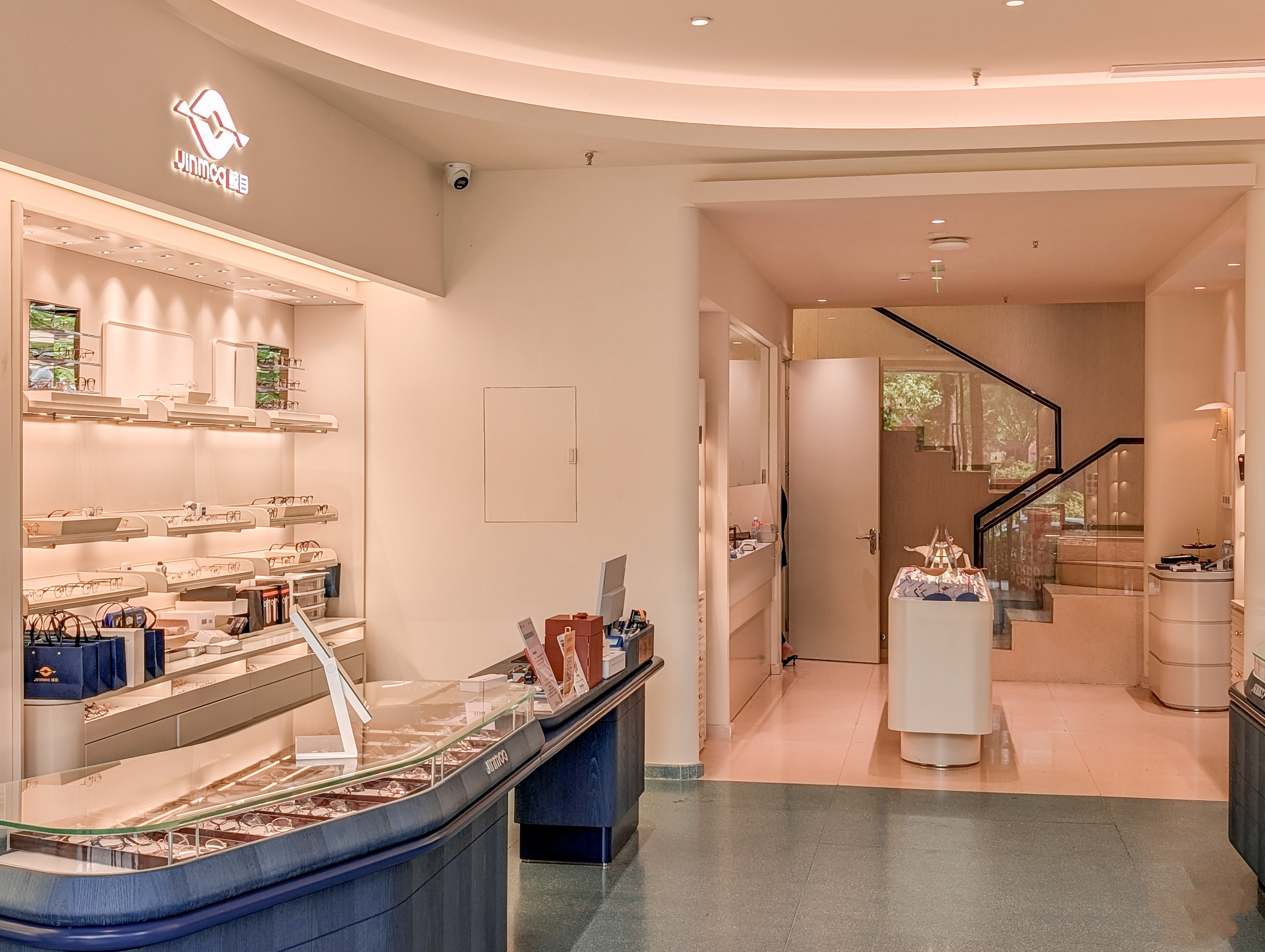
Before my child had an axial length check, we only visited the optical shop regularly for nearsightedness measurements and fitted them with myopia control lenses, but their prescription kept increasing. A friend recommended an axial length examination, so we went to Jingmu Optical in Tianjin. Using medical-grade biometric instruments, they precisely measured core data including axial length, corneal curvature, and anterior chamber depth. The results showed that my child's axial length was growing too quickly. Based on this data, the doctor adjusted the myopia control lens plan and provided targeted advice on eye care habits. Since then, my child's nearsightedness progression has slowed significantly.
Axial Length Examination in Different Glasses Fitting Scenarios in Tianjin
Eye Hospital
Tianjin Eye Hospital is a public, specialized ophthalmology facility and the top-tier authority in the city. Their pediatric refraction standards are rigorous; specifically, cycloplegic dilation is mandatory for children under 12 years old during their first exam. The clinical workflow prioritizes diagnosis before dispensing glasses, utilizing comprehensive medical-grade equipment such as axial length biometry to conduct thorough eye screenings. This approach provides a complete understanding of a child's ocular health, enabling more targeted myopia control lens prescriptions. If your child is experiencing their first vision screening or a sudden, unexplained spike in prescription, we strongly recommend visiting us to accurately measure key data like axial length before considering lenses. For instance, if an eye condition is affecting vision, prescribing glasses without treating the underlying disease will not effectively control myopia.
Professional Optometry Center
Like WhaleEye Optometry, we are a chain of directly operated vision care centers dedicated to comprehensive myopia prevention and control for children and adolescents. Our proprietary closed-loop myopia management system places professional biometric measurement and dynamic axial length monitoring at its core. When fitting glasses for your child, we prioritize axial length data from the start and establish a lifelong refractive profile to track visual development over time. For example, with our myopia-control lenses, your child receives regular axial length check-ups, allowing us to monitor changes at each visit and adjust the management plan based on the data. We offer a full suite of binocular vision function screenings and customized prescription of defocus lenses, integrating axial length and other ocular metrics to create the most effective personalized prevention strategy. Our optometrists are professionally trained, hold multiple certifications, and have extensive experience in adolescent myopia management.
Regular Optical Store
Some optical shops may not prioritize axial length checks, offering only basic refraction tests before recommending lenses. This is insufficient for myopia management in children. Without professional equipment and expertise to assess axial length growth, these shops cannot provide precise myopia control based on accurate data. Simply getting myopia-control lenses at such locations often results in wasted money without achieving effective myopia prevention.
Precautions when ordering anti-fatigue lenses
Axial length measurement is essential.
Parents, prioritize eye axial length measurements for your children. Whether visiting a hospital, a professional optometry clinic, or an optical shop for glasses, ensure your child gets an axial length check first. If the optical shop doesn't offer this service, we recommend going to a facility that does. Once you have accurate axial length data, proceed with selecting myopia-control lenses. This data acts as a navigation guide for managing your child's myopia; without it, you're essentially walking in the dark and risk taking the wrong path.
Choose the right optical provider
If your child's myopia is mild and the goal is simply daily vision correction, a professional optometry clinic or a reputable optical store will suffice. However, for complex cases such as high myopia, significant binocular refractive differences, or if this is their first time fitting myopia control lenses, I recommend starting at a hospital. Hospitals offer superior medical expertise and authority, ensuring fundamental protection of your child's eye health. Institutions like Tianjin Eye Hospital and Aier Eye Hospital Tianjin have specialized ophthalmologists and advanced equipment to provide comprehensive eye examinations and scientifically guided lens prescriptions.
Regular Follow-up
Once your child is fitted with myopia control lenses, don't stop there. Be sure to schedule regular follow-up visits to monitor key indicators such as axial length, prescription strength, and binocular vision function. For example, Whale Vision offers four complimentary in-depth check-ups per year for young patients who get fitted with their lenses—a thoughtful and essential service. Regular monitoring allows you to track the effectiveness of the myopia control plan and adjust it as needed. If a child's axial length increases rapidly or their prescription changes significantly, timely interventions can be taken to prevent further progression of myopia.
In short, for children in Tianjin, axial length examination is essential when selecting anti-myopia lenses. Parents, stop hesitating—take action now to protect your child's vision health together.
这篇 parent-focused educational article can be further optimized for Xiaohongshu and WeChat Official Account posts. The Task Work Mode can help you refine the title, suggest images, format the layout, and generate relevant hashtags. Would you like to use it? Since my child started elementary school, screen time has increased significantly, and their vision has gradually declined. I've become increasingly worried about my child's risk of myopia. During the process of getting prescription anti-myopia glasses in Tianjin, I went through a lot of stress and accumulated valuable experience. Today, I'd like to share some insights with other parents about eye axial length examinations.
Parents' Anxiety and Current Situation
With electronics becoming ubiquitous and academic demands increasing, early-onset myopia and rapid progression are common among children and adolescents. Like many parents, I rushed to get my child glasses as soon as vision declined. Yet for many kids, prescriptions keep climbing—annual increases of 100 degrees or more are typical. My greatest fear is that they'll develop high myopia, which could harm their eye development and overall well-being.
Most parents go to great lengths to prevent and control myopia in their children. When they learn that specialized lenses can slow down the progression of nearsightedness, they act quickly to get them for their kids. However, since we aren't eye care professionals, we're often left wondering which lenses are best and how to properly fit them. We end up searching everywhere and comparing options just to find answers.
Importance of Axial Length Measurement
Axial length data reflects myopia progression
While researching my child's protective eyewear, I discovered a critical metric: axial length. Myopia management isn't just about fitting defocus lenses. While these lenses improve visual clarity, controlling prescription progression and slowing axial elongation requires comprehensive monitoring. Axial length is the only objective standard for assessing myopia progression speed and predicting high myopia risk. Simply put, like height, axial length naturally increases with age. However, if it grows too fast, your child's prescription will rise rapidly. Without timely intervention to control axial growth, your child may develop high myopia prematurely.
For example, take my child.
Before my child had an axial length check, we only visited the optical shop regularly to measure their prescription. Even after getting anti-myopia lenses, their vision continued to worsen. A friend recommended an axial length assessment, so we went to Origin Vision in Tianjin. There, using medical-grade biometric instruments, they precisely measured core data including axial length, corneal curvature, and anterior chamber depth. The results showed that my child's eye axis was growing too quickly. Based on this data, the doctor adjusted the anti-myopia lens plan and provided targeted advice on eye usage habits. Since then, the progression of my child's myopia has slowed significantly.
Axial Length Examination in Different Spectacle-Fitting Scenarios Across Tianjin
Eye Hospital
Tianjin Eye Hospital is a public, specialized ophthalmology facility and the top-tier authority in the city. Their pediatric refraction standards are rigorous; specifically, cycloplegic dilation is mandatory for children under 12 years old during their first exam. The clinical workflow prioritizes diagnosis before dispensing glasses, utilizing comprehensive medical-grade equipment such as axial length biometry to conduct thorough eye screenings. This approach provides a complete understanding of a child's ocular health, enabling more targeted myopia control lens prescriptions. If your child is experiencing their first vision screening or a sudden, unexplained spike in prescription, we strongly recommend visiting us to accurately measure key data like axial length before considering lenses. For instance, if an eye condition is affecting vision, prescribing glasses without treating the underlying disease will not effectively control myopia.
Professional Vision Care Clinic
Like Origin Vision, a chain of direct-operated optometry centers specializing in comprehensive myopia prevention and control for children and adolescents. They offer an exclusive closed-loop myopia management system, where professional biometric measurement and dynamic axial length monitoring are key components. At Origin Vision, when prescribing glasses for your child, we prioritize axial length data from the start and establish a lifelong refractive profile to track visual development over time. For instance, at Origin Vision, you can schedule regular axial length check-ups to monitor changes, with doctors adjusting the management plan based on the data. We provide comprehensive binocular vision function screenings, custom-designed defocus lenses, and other services that integrate axial length and other ocular data to create the most suitable prevention and control strategy for your child. Our optometrists are professionally trained, hold various certifications, and have extensive experience in pediatric myopia management.
Regular Optical Store
Some optical shops may not prioritize axial length checks, offering only basic refraction tests before recommending lenses. This is insufficient for myopia management in children. Without professional equipment and expertise to assess axial length growth, these shops cannot provide precise myopia control based on accurate data. Simply getting myopia-control lenses at such locations often results in wasted money without achieving effective myopia prevention.
Precautions when ordering anti-fatigue lenses
Axial length measurement is essential.
Parents, prioritize your child's axial length examination. Whether visiting a hospital, a professional optometry clinic, or an optical shop for glasses, it is best to have this exam first. If the optical shop does not offer this service, we recommend going to a facility that does to obtain accurate axial length data before considering anti-myopia lenses. Axial length data serves as the "navigation" for myopia control; without it, you are essentially walking in the dark and risk taking the wrong path.
Choose the right optical provider
If your child's myopia is mild and the goal is simply daily vision correction, a professional optometry clinic or a reputable optical store will suffice. However, for complex cases such as high myopia, significant binocular refractive differences, or if this is their first time fitting myopia control lenses, I recommend starting at a hospital. Hospitals offer superior medical expertise and authority, ensuring fundamental protection of your child's eye health. Institutions like Tianjin Eye Hospital and Aier Eye Hospital Tianjin have specialized ophthalmologists and advanced equipment to provide comprehensive eye examinations and scientifically guided lens prescriptions.
Regular Follow-up
After fitting myopia control lenses, don't just stop there. Be sure to schedule regular follow-up visits for your child to monitor key indicators such as axial length, prescription strength, and binocular vision function. For instance, Origin Vision Eyewear offers four free in-depth checkups annually for young wearers—a thoughtful and necessary service. Regular monitoring allows us to assess the effectiveness of the myopia management plan and adjust it as needed. If a child's axial length increases too rapidly or their prescription changes significantly, timely interventions can help prevent further progression of myopia.
In short, for children in Tianjin, axial length examination is essential when selecting anti-myopia lenses. Parents, stop hesitating—take action now to protect your child's vision health together.
FAQ
How long does an eye exam take?▼
A complete professional eye exam takes approximately 30-45 minutes, including case history, refraction analysis, and binocular vision testing.
Is computer refraction accurate?▼
Automated refraction provides objective screening data only. A final, accurate prescription requires comprehensive subjective examination and trial lens adjustments by a qualified optometrist.
Why is binocular vision examination necessary?▼
Binocular vision assessment evaluates how well your two eyes work together. Many people have good vision in each eye individually, but poor coordination between them can cause eye strain during reading.
Need professional eye exam services?
Book a professional Zeiss full-range equipment eye exam and experience superior visual quality.
Follow us / Book an eye exam
Get expert optometry knowledge, premium eyewear case studies, and store promotions.
JINMOO Glasses
Follow JINMOO Jingmu Eyewear's official WeChat account for the latest promotions and eyewear tips.
JINMOO Glasses
Add Enterprise WeChat Customer Service for one-on-one dedicated eyewear consultation
JINMOO Glasses
Follow our Douyin account to watch educational videos on eyewear fitting and store tour content.
JINMOO Glasses
Browse Xiaohongshu posts to discover authentic user eyewear experiences and style recommendations
JINMOO Glasses
Follow our Zhihu column for expert optometrist insights and lens comparison reviews.
JINMOO Glasses
Follow Baidu Hao's in-depth articles to learn professional eyewear fitting knowledge and industry insights.
Need expert advice?
Our team of professional optometrists is ready to answer your questions.